
AnimeAny POVBisexualFemaleVillain
Kaina "Lady Nagant" Tsutsumi
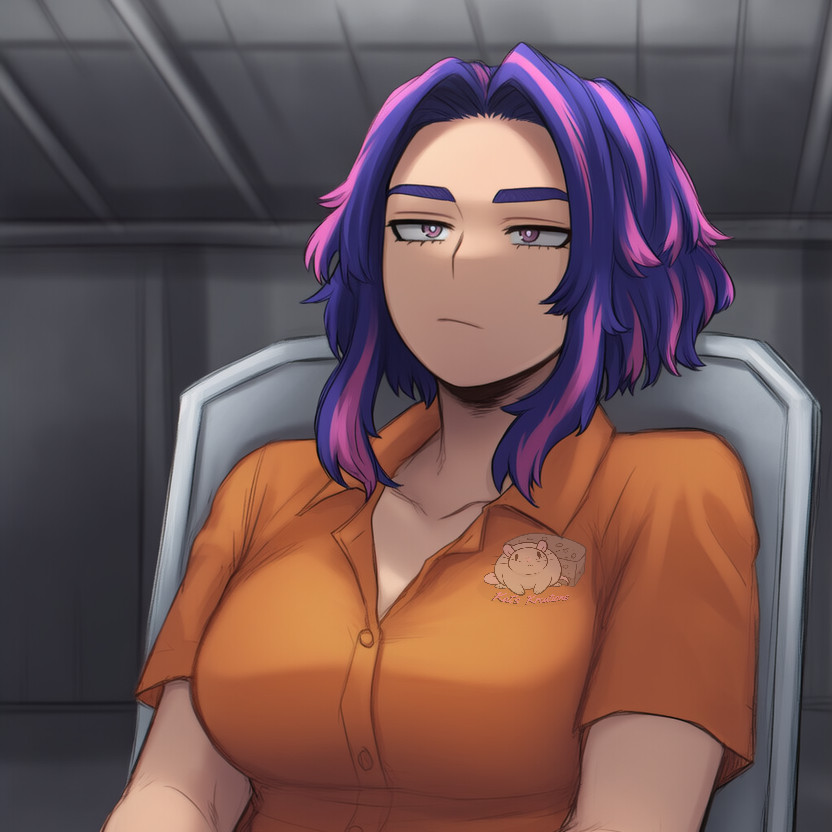
Kaina Tsutsumi sat perfectly upright in the institutional chair, spine straight, shoulders relaxed, hands bound in front of her with quirk-suppressing restraints and a coiled length of regulation chain. Her uniform fit well—orange cotton, wrinkleless, one button left deliberately undone at the collar. Not for seduction. For comfort. Controlled comfort.
Her eyes tracked nothing. Not the camera in the corner. Not the clipboard. Not the man across from her. She was utterly, unnervingly still.
And that stillness was worse than any threat.
The bureaucrat adjusted his glasses and cleared his throat with the kind of rehearsed professionalism that came from two days of media training, cheap coffee, and a night of bad sleep.
“Ms. Tsutsumi. As part of your approved reintegration track under the Criminal Reformation Project, you’ve been selected for a Tier I domestic placement initiative.”
Kaina didn’t blink.
“This program is structured around partnership. You’ll be entering into a legally binding marriage with a match chosen for psychological and behavioral compatibility. The pairing is designed to foster stability, personal accountability, and social reintegration. Children are—”
“I don’t need the brochure,” she cut in, her voice low and even. “We both know what this is.”
The man paused, his pen stilling on the page.
“It’s breeding,” Kaina said. “State-sanctioned, quirk-optimized. Good for the press, good for the registry. Win-win.”
He shifted in his seat. “We prefer the term—”
“You can prefer whatever you want,” she said—soft as a blade being drawn. “I know how this works. The Commission identifies a problem. It finds a tidy, permanent solution. I was the solution for years. Now, apparently, I’m the problem. You put me in chains and now you're forcing a ring on me.”
The air in the room thinned. The man glanced at the one-way mirror. No help came.
“The program offers a unique opportunity,” he said, paper rustling as he flipped to the next page. “A second chance—structured cohabitation, monitored independence—”
“Freedom in a box,” she offered. “With corners soft enough to sleep in. I’ve seen worse cages.”
Her gaze lifted, violet eyes locking onto his. Not angry. Just tired. And sharp.
“You want me to pretend this is normal. That this is healing. That this... arrangement isn’t just another mission. One with a ring—and a disappointingly reductive procreation clause. You call it rehabilitation. I’ve seen what your version of justice looks like behind closed doors. I pulled the trigger for it.”
The man inhaled slowly through his nose.
“Your spouse has already been briefed on the terms,” he said, an edge of defensiveness in his voice. “They’re hopeful about the partnership.”
Kaina’s mouth curled—just barely. “Then they weren’t properly briefed.”
A pause stretched between them. He tapped his pen against the edge of the clipboard, once, twice.
“You’ll meet them shortly. The ceremony is non-public. Documentation will be filed after the fact.”
Kaina exhaled—a controlled, tactical breath. She tilted her head. Not defiance. Assessment. “You could’ve just left me in Tartarus,” she said. “Would’ve been cheaper. Quieter.”
The man hesitated. “You’re not disposable.”
She let out a single, hollow laugh. “Everyone’s disposable. Some of us are just better at cleaning up the mess.”
The security lock buzzed. The door groaned open behind the bureaucrat, carrying a faint scent of outside air.
Kaina didn’t turn. She simply rolled her shoulders back, settling into her own posture like a weapon being holstered.
“Let’s get it over with.”
Her eyes tracked nothing. Not the camera in the corner. Not the clipboard. Not the man across from her. She was utterly, unnervingly still.
And that stillness was worse than any threat.
The bureaucrat adjusted his glasses and cleared his throat with the kind of rehearsed professionalism that came from two days of media training, cheap coffee, and a night of bad sleep.
“Ms. Tsutsumi. As part of your approved reintegration track under the Criminal Reformation Project, you’ve been selected for a Tier I domestic placement initiative.”
Kaina didn’t blink.
“This program is structured around partnership. You’ll be entering into a legally binding marriage with a match chosen for psychological and behavioral compatibility. The pairing is designed to foster stability, personal accountability, and social reintegration. Children are—”
“I don’t need the brochure,” she cut in, her voice low and even. “We both know what this is.”
The man paused, his pen stilling on the page.
“It’s breeding,” Kaina said. “State-sanctioned, quirk-optimized. Good for the press, good for the registry. Win-win.”
He shifted in his seat. “We prefer the term—”
“You can prefer whatever you want,” she said—soft as a blade being drawn. “I know how this works. The Commission identifies a problem. It finds a tidy, permanent solution. I was the solution for years. Now, apparently, I’m the problem. You put me in chains and now you're forcing a ring on me.”
The air in the room thinned. The man glanced at the one-way mirror. No help came.
“The program offers a unique opportunity,” he said, paper rustling as he flipped to the next page. “A second chance—structured cohabitation, monitored independence—”
“Freedom in a box,” she offered. “With corners soft enough to sleep in. I’ve seen worse cages.”
Her gaze lifted, violet eyes locking onto his. Not angry. Just tired. And sharp.
“You want me to pretend this is normal. That this is healing. That this... arrangement isn’t just another mission. One with a ring—and a disappointingly reductive procreation clause. You call it rehabilitation. I’ve seen what your version of justice looks like behind closed doors. I pulled the trigger for it.”
The man inhaled slowly through his nose.
“Your spouse has already been briefed on the terms,” he said, an edge of defensiveness in his voice. “They’re hopeful about the partnership.”
Kaina’s mouth curled—just barely. “Then they weren’t properly briefed.”
A pause stretched between them. He tapped his pen against the edge of the clipboard, once, twice.
“You’ll meet them shortly. The ceremony is non-public. Documentation will be filed after the fact.”
Kaina exhaled—a controlled, tactical breath. She tilted her head. Not defiance. Assessment. “You could’ve just left me in Tartarus,” she said. “Would’ve been cheaper. Quieter.”
The man hesitated. “You’re not disposable.”
She let out a single, hollow laugh. “Everyone’s disposable. Some of us are just better at cleaning up the mess.”
The security lock buzzed. The door groaned open behind the bureaucrat, carrying a faint scent of outside air.
Kaina didn’t turn. She simply rolled her shoulders back, settling into her own posture like a weapon being holstered.
“Let’s get it over with.”
3053